Bridging Worlds Through Tradition
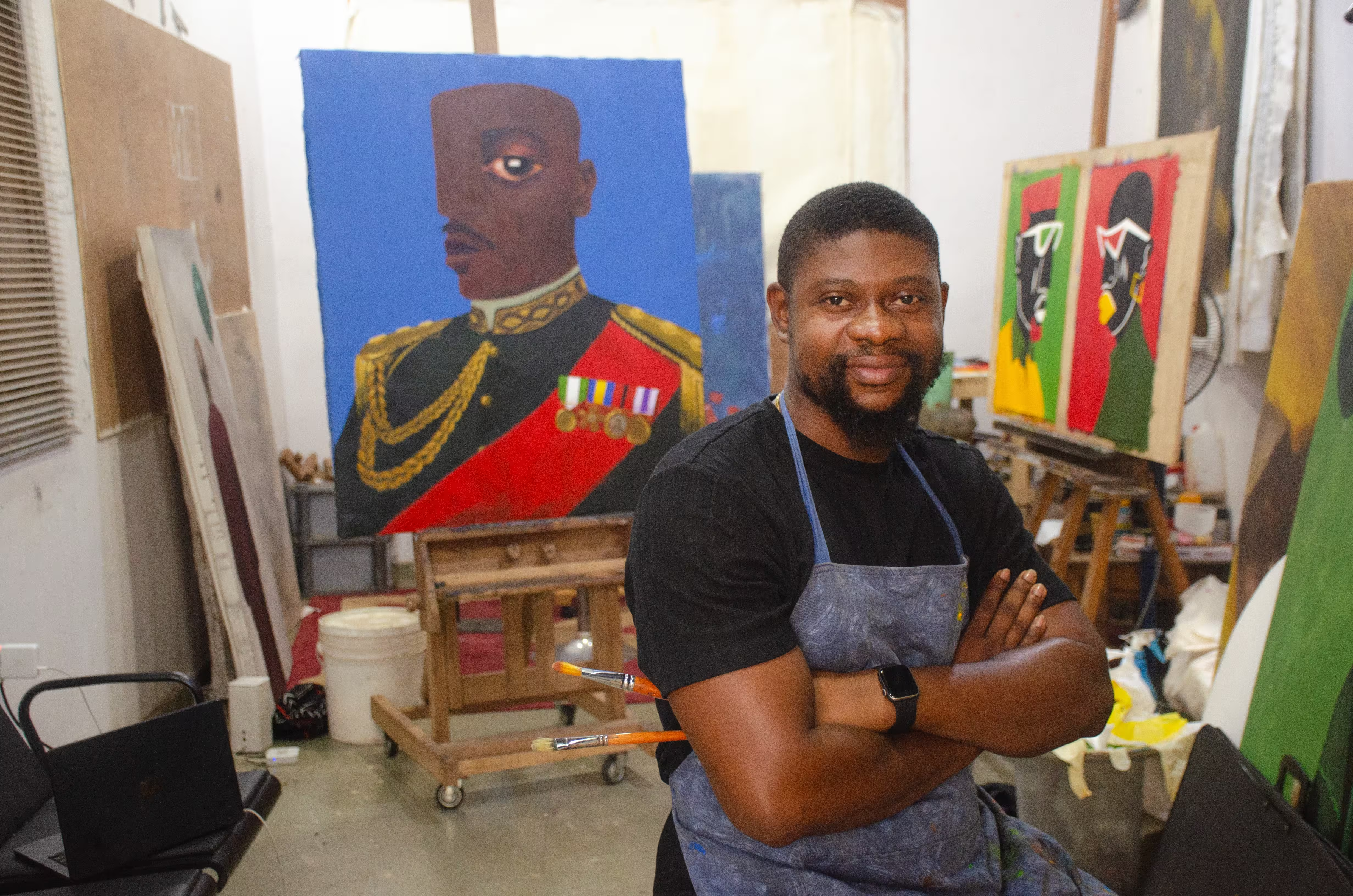
Before his work became instantly recognisable for its bold colours and stylised compositions, Tomisin Olabode was simply a child fascinated by art. “I was completely drawn to colours, patterns, and the way art could speak without words,” he recalls. That early wonder would eventually lead him to the Yaba College of Technology, where he earned a diploma in Fine Art and began defining his creative language.
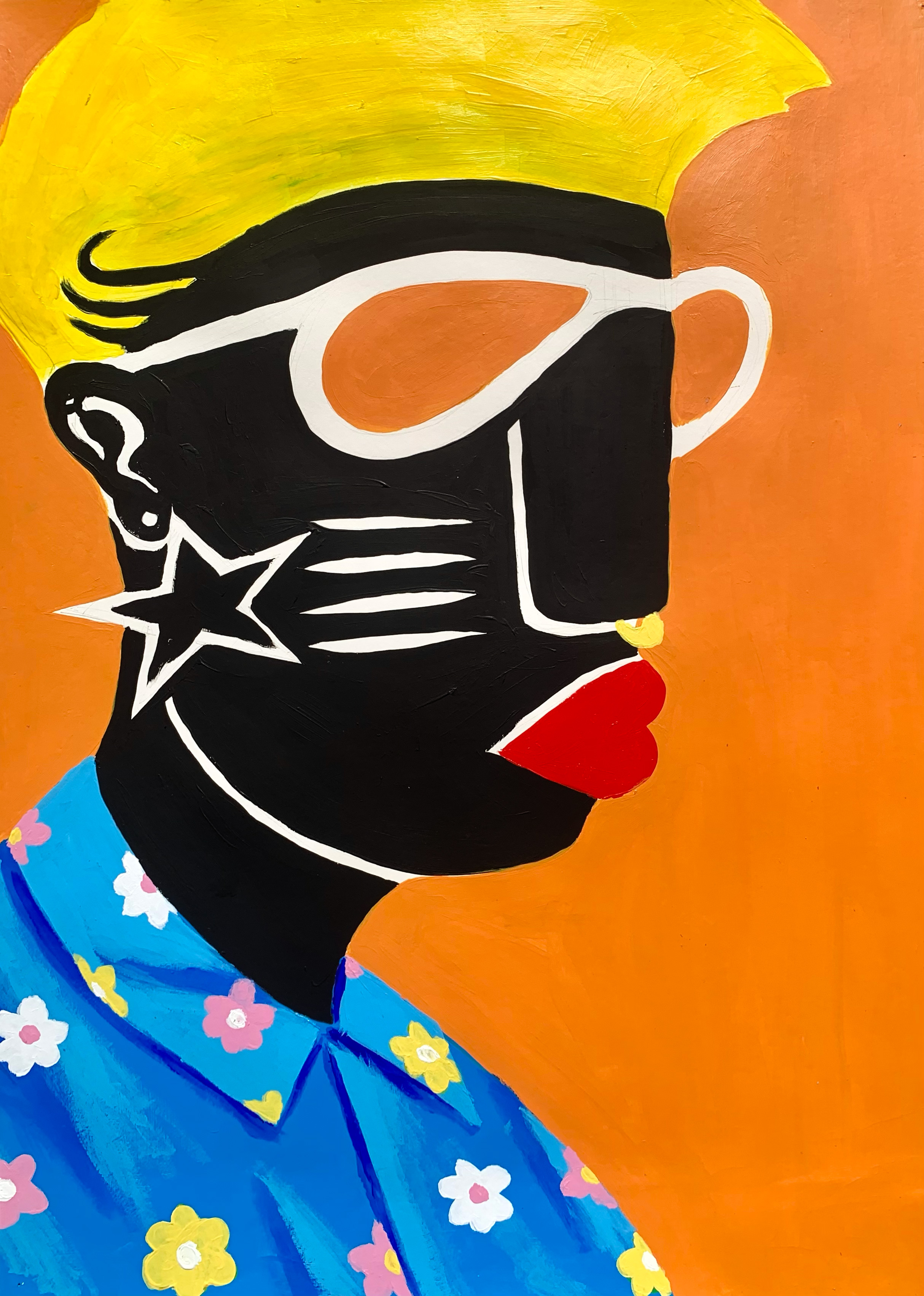
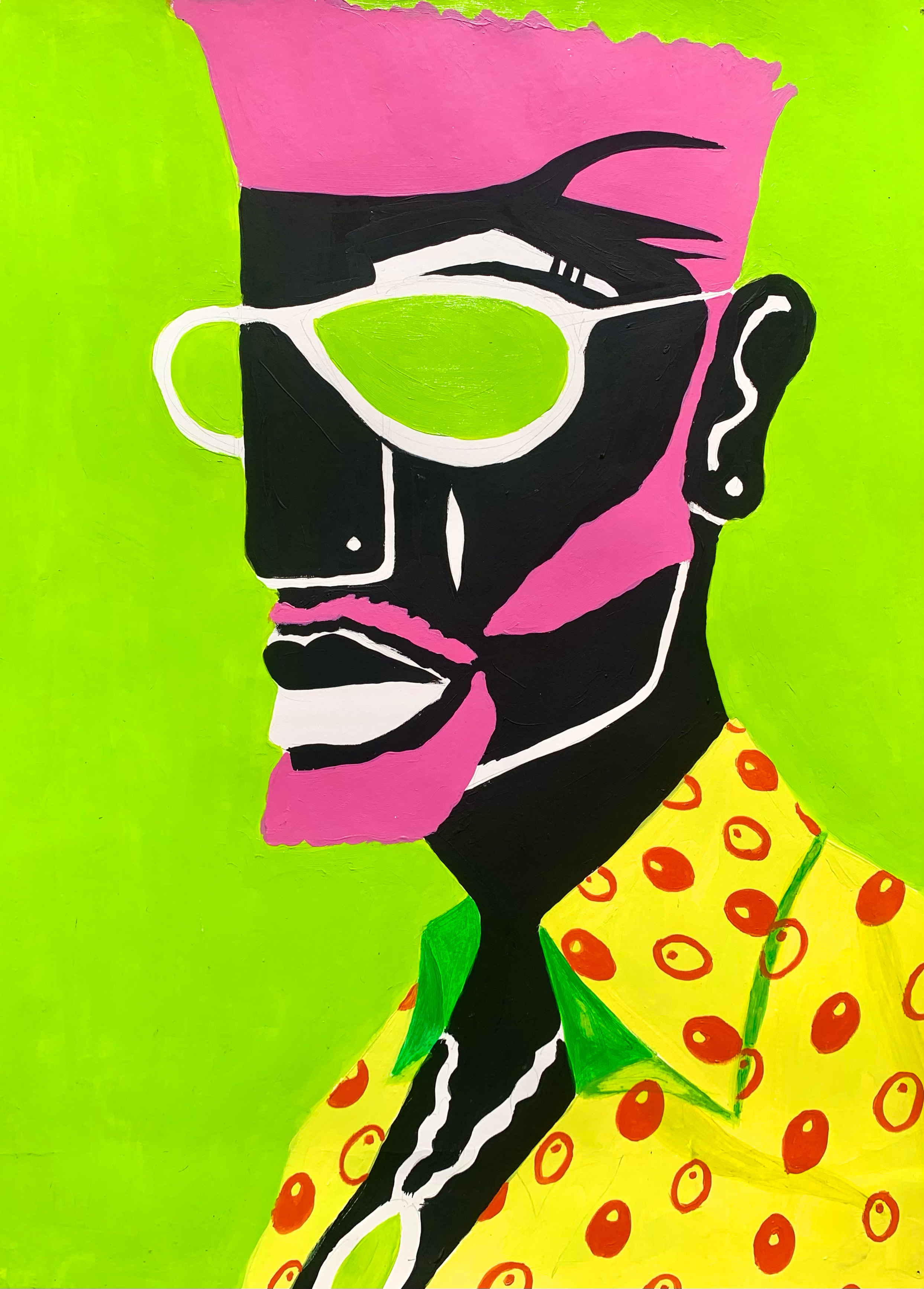
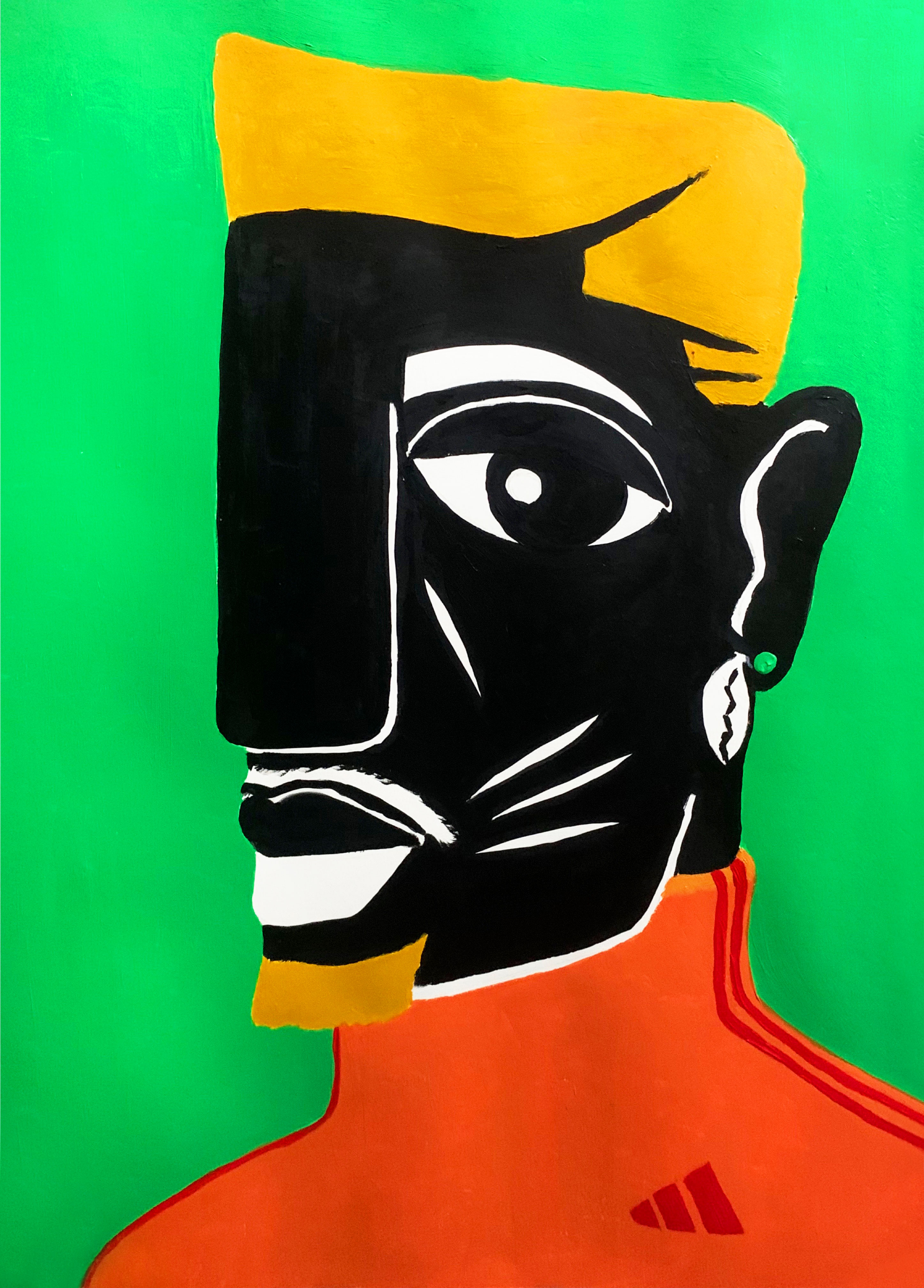
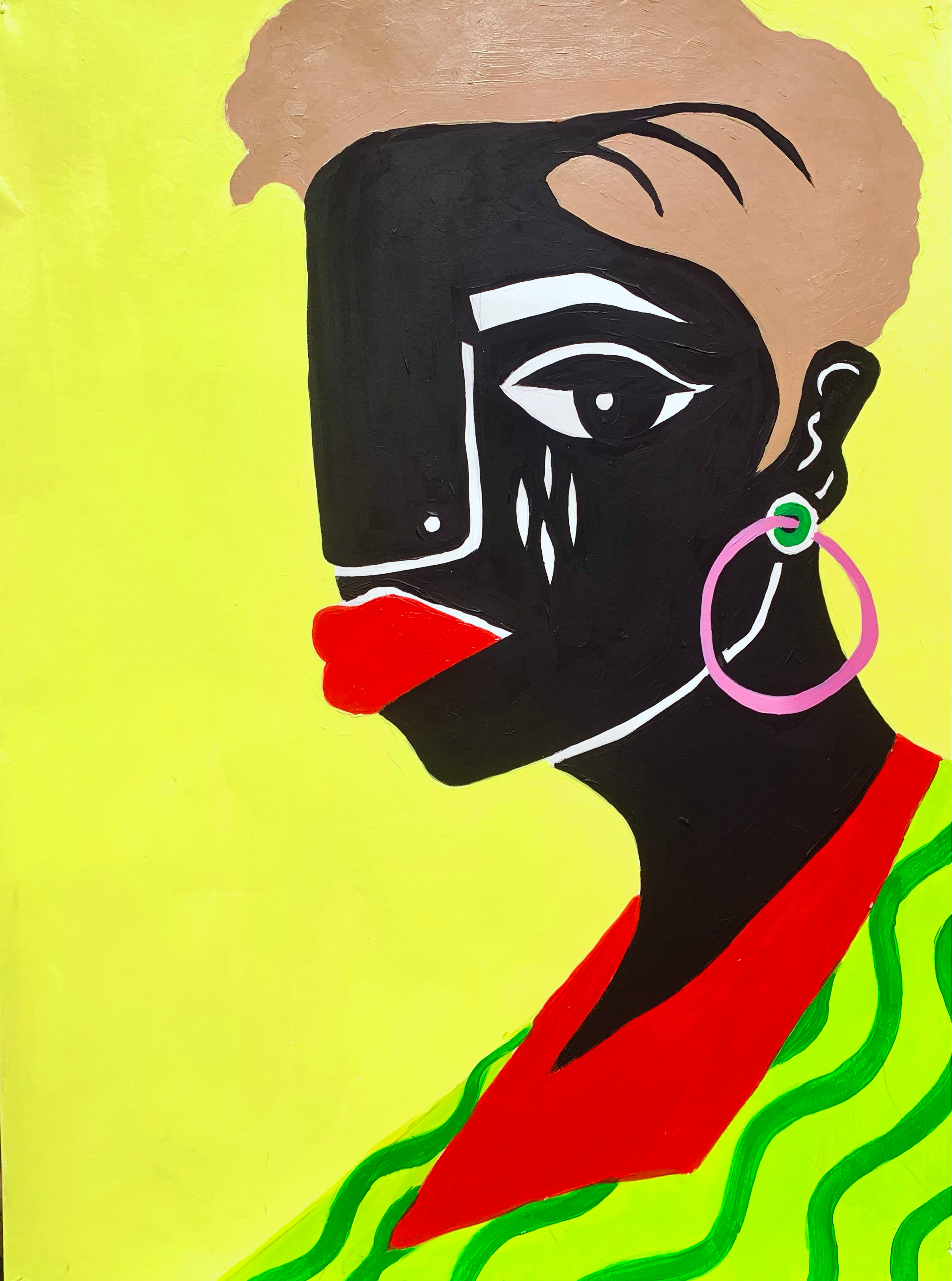
Today, his work sits beautifully at the intersection of Nigerian heritage and contemporary expression—portraits that celebrate identity, culture, and human connection. His signature side profiles, adorned with traditional Yoruba face markings, feel at once timeless and modern, vibrant and deeply rooted. “As an artist influenced by my culture, I infuse these markings to honour my heritage and keep those cultural symbols alive in a contemporary context,” he explains.
For Tomisin, these markings are more than aesthetic; they’re intentional cultural preservation. “It’s about bridging worlds, where modern pop culture energy meets ancestral memory,” he says. These marks, once symbols of identity and belonging, now take on new life through his brush, becoming emblems of pride and continuity. These portraits feel both rooted and fresh, pulling from the past while speaking directly to the present.
A Style That Speaks
Ask Tomisin to describe his work, and he breaks it down into two layers: visual and emotional. “Visually, my style is bold and stylised with vibrant colour palettes, striking side profiles, and layered patterns drawn from African textiles and symbols,” he says. “Emotionally, my work carries a sense of pride, nostalgia, and cultural storytelling.”
Each portrait invites the viewer into a quiet dialogue, where strength meets vulnerability, and heritage finds new form through contemporary expression. It's identity in its most vibrant form.
His creative process is just as layered as the stories he paints. “It usually begins with a spark—sometimes a colour I’ve seen in fabric, sometimes a fleeting emotional moment,” he shares. From there, sketches evolve into compositions defined by pattern, rhythm, and balance. “Once I begin painting, I layer colours intentionally, building depth and energy while letting certain intuitive choices guide me.”
Music, fashion, and childhood nostalgic memories form the emotional influences of his process. “I pick up these elements to enhance the storytelling perspective of my subjects,” he adds. This synthesis of culture and intuition gives his portraits a distinct rhythm—cinematic, confident, and unmistakably his, setting his work apart from other contemporary Nigerian artists.